Ignorance Is Bliss Meaning: The Surprising Truth Behind the Saying
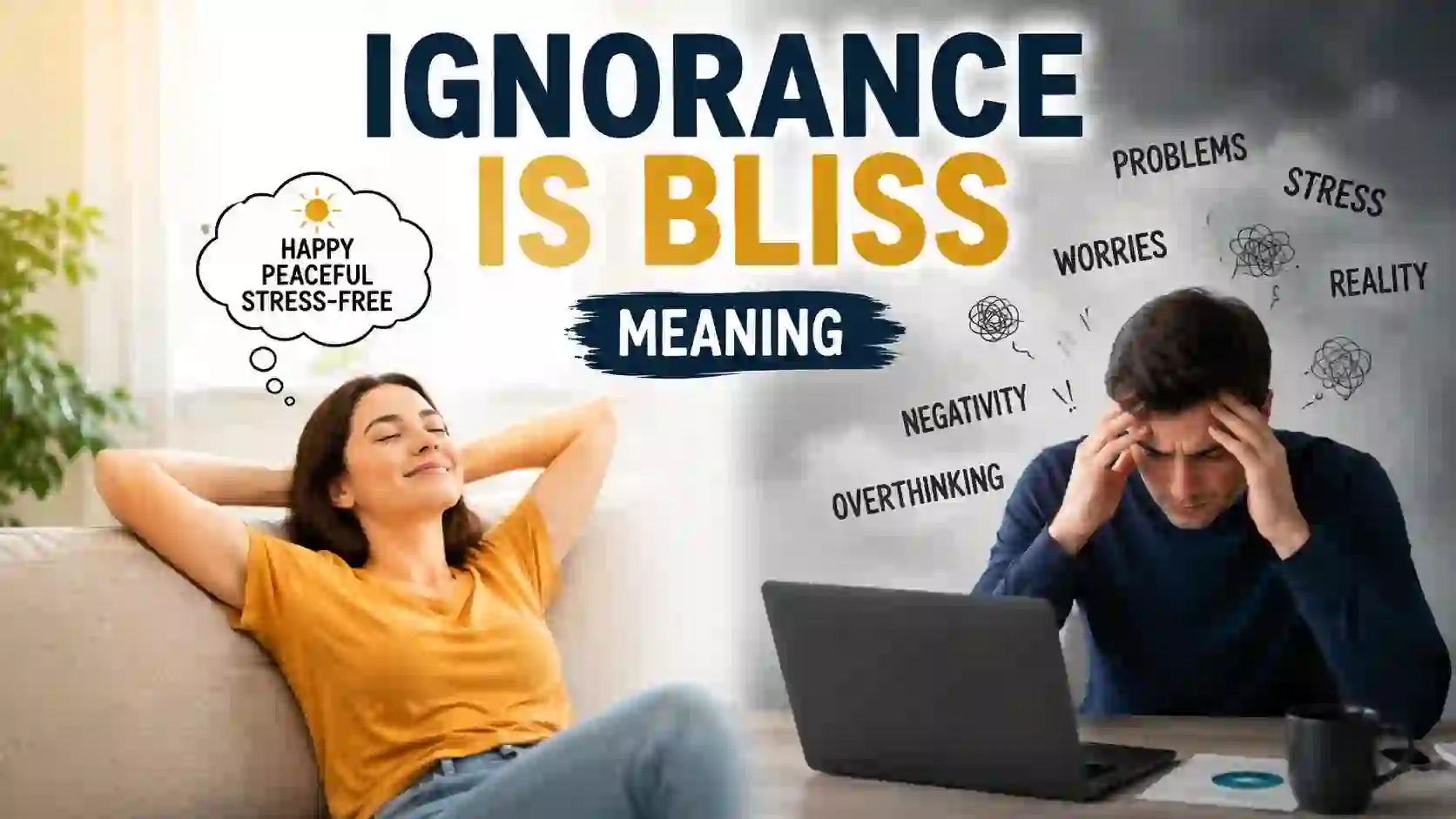
Most people use “ignorance is bliss” without understanding its real weight. The ignorance is bliss meaning goes deeper—it explains why we avoid painful truths to stay comfortable. That comfort often carries a heavy price. This guide exposes the hidden layers, so you can choose clarity over costly blind spots.
The Real Ignorance Is Bliss Meaning: A Simple Breakdown
The core ignorance is bliss meaning is this: not knowing about a problem or an unpleasant fact can temporarily shield you from worry, guilt, or pain. You feel lighter because the weight of that knowledge hasn’t landed yet.
Think of it as a mental pause button. You aren’t solving anything—you’re just not pressing play on the discomfort. People confuse this with happiness, but it’s really a form of emotional avoidance that wears off the moment reality forces its way in.
Grasping this ignorance is bliss meaning helps you spot the difference between peace that comes from acceptance and a calm that comes from hiding. One builds strength; the other builds a fragile bubble.
Where Did the Phrase Come From? The Thomas Gray Connection
The phrase traces back to 1742 in Thomas Gray’s poem “Ode on a Distant Prospect of Eton College.” Gray wrote, “Where ignorance is bliss, ’tis folly to be wise.” He watched schoolboys play carefree, unaware of the hardships adulthood would bring.
Gray wasn’t praising stupidity. He captured a bittersweet truth: childhood innocence feels joyful precisely because the mind hasn’t absorbed life’s cruelties. The line originally mourned the loss of that bliss, not celebrated it.
Over centuries, popular culture stripped away the sorrow and turned it into a casual excuse. Today the ignorance is bliss meaning often gets twisted into permission to ignore uncomfortable facts instead of grieving a loss of innocence.
The Psychology Behind Why Not Knowing Feels Safe
Your brain treats uncertainty as a threat. When facing a potentially painful truth, the amygdala triggers a stress response that pushes you toward the quickest relief—looking away. Psychologists call this information avoidance, and it’s wired deep.
A landmark study by Sweeny, Melnyk, Miller, and Shepperd (2010) found that people actively dodge medical test results, financial statements, and relationship feedback when they anticipate distress. The short-term payoff is emotional calm; the long-term cost is poorer decisions and shattered trust.
Another force is the ostrich effect—named after the myth that ostriches bury their heads. You intentionally ignore negative data to stay in a comfort bubble. That’s the engine behind the ignorance is bliss meaning: your survival instinct overrides your rational self.
5 Everyday Situations Where Ignorance Brings Temporary Peace
You brush off a weird physical symptom instead of booking a doctor’s appointment. Ignorance hands you a worry-free week, but the untreated issue may grow quietly.
You avoid checking your bank balance after a spending spree. For a few days, you feel rich. When reality hits, the overdraft fee stings twice as hard.
You scroll past disturbing news headlines because they ruin your mood. You enjoy a pleasant evening, yet you miss vital information that might affect your community or career.
You never ask your partner how they really feel about a growing distance. You keep the peace at dinner, but the disconnection widens underground.
You ignore a strange noise in your car engine. The silence on your drive feels serene, right up until a breakdown leaves you stranded and facing a fat repair bill.
| Scenario | Why It Feels Like Bliss | Hidden Danger |
| Skipping a health check | No immediate anxiety | Delayed diagnosis, worse outcome |
| Ignoring bank statements | Illusion of financial ease | Debt pile-up, credit damage |
| Avoiding difficult news | Mood stays stable | Unprepared for real-world shifts |
| Dodging relationship talks | Surface harmony | Resentment buildup, breakup |
| Neglecting car repairs | Quiet ride | Expensive breakdown, safety risk |
The Hidden Dangers of Staying Uninformed
When you cling to the ignorance is bliss meaning as a lifestyle, small cracks turn into canyons. Information avoidance in health, for instance, is linked to late-stage cancer detection and higher mortality rates because people delay screenings they fear.
In money matters, deliberately looking away from debt lets compound interest work against you like a silent avalanche. A 2022 Pew Research Center report showed that adults who avoid financial news due to stress end up less prepared for retirement than those who engage, even when the news is negative.
Psychologically, sustained avoidance trains your brain to fear knowledge itself. You become a person who runs from feedback, stifling growth at work, in friendships, and inside your own mind. The temporary bliss becomes a permanent cage.
Ignorance Is Bliss Meaning in Love and Relationships
The ignorance is bliss meaning takes on a raw edge in intimate relationships. You might suspect a partner is drifting, yet you say nothing. You equate silence with stability, but your gut keeps a different score.
Research on relational information avoidance shows that partners who sidestep tough conversations report higher momentary satisfaction but lower long-term trust. The unspoken pile grows, and one day a trivial argument detonates years of suppressed truth.
Honest communication feels painful in the moment. It rips the bliss away. Yet that same honesty becomes the only soil where real intimacy can grow. Choosing awareness here isn’t about punishment—it’s about protecting the connection you actually want.
How Information Overload Makes Ignorance More Tempting Today
We swim in a tsunami of headlines, push notifications, and algorithm-curated outrage. The human brain, originally designed for a small tribe’s worth of daily input, now gets pummeled with global crises every minute. The natural response is to numb out and chase the ignorance is bliss meaning like a painkiller.
Pew Research Center data from 2022 found that 41% of U.S. adults sometimes or often avoid the news because it wears them down. They don’t lack curiosity; they lack the bandwidth to process constant trauma. Ignorance becomes a survival tactic, not a character flaw.
The antidote isn’t consuming everything. It’s curating your information diet intentionally—setting boundaries on news time, choosing a few trusted outlets, and giving your brain recovery windows. Strategic ignorance preserves your mental health; blind avoidance erodes your agency.
Pop Culture References: Movies, Books, and Songs That Use the Saying
The ignorance is bliss meaning echoes across entertainment because it pulls at a universal nerve. In The Matrix, Cypher chooses a fake steak and a comfortable lie over the harsh real world—a perfect cinematic embodiment of the phrase.
George Orwell’s *1984* flips it into a warning: a society that embraces ignorance willingly hands over its freedom. The bliss of not knowing becomes the chains you don’t see.
Songs like “What You Don’t Know” by Exposé and “Bliss” by Muse tap into the tension between wanting the truth and craving peace. Creators keep returning to this theme because every listener has faced that fork in the road.
When Facing the Truth Leads to a Better Life
Letting go of the ignorance is bliss meaning as a default setting opens doors you didn’t know were locked. A cancer survivor who caught the lump early will tell you that one terrifying doctor’s visit saved decades. A couple who dragged their buried resentments into therapy will say that brutal honesty rebuilt a marriage on solid ground.
Facing reality rewires your confidence. You stop fearing what’s around the corner because you’ve proven to yourself that you can handle hard facts. That earned resilience feels far better than bliss—it feels like freedom.
Start small. Look at the account balance. Schedule the checkup. Ask the difficult question. Each act of bravery shrinks the monster you were running from.
A Practical Guide to Balancing Awareness and Peace of Mind
Blind ignorance and obsessive information-gathering both hurt you. The sweet spot sits in intentional knowing—choosing what to learn and when, based on your capacity and the decision at hand.
- Classify your “bliss zones.” Decide where ignorance genuinely serves you. Maybe you don’t need to know every celebrity breakup. That’s harmless.
- Draw a hard line on health, money, and relationships. In these areas, the ignorance is bliss meaning always costs more than the pain of knowing.
- Schedule a “truth hour” weekly. Spend 10 minutes checking something you’ve been avoiding. The dread shrinks once it becomes routine.
- Pair hard facts with action. Knowledge paralyzes only when you don’t attach a next step. “My cholesterol is high” becomes manageable when paired with “I’ll walk 20 minutes daily.”
This isn’t about becoming a hyper-vigilant information sponge. It’s about taking the steering wheel back.
Frequently Asked Questions About Ignorance Is Bliss Meaning
What is the ignorance is bliss meaning in simple terms?
The ignorance is bliss meaning is the idea that not knowing about something unpleasant keeps you feeling happier or calmer in the short run. It’s a mental shield that blocks stress, but it often creates larger problems later.
Where did the phrase “ignorance is bliss” originate?
English poet Thomas Gray coined it in his 1742 poem “Ode on a Distant Prospect of Eton College.” The full line reads, “Where ignorance is bliss, ’tis folly to be wise,” describing the carefree innocence of children unaware of future suffering.
Why do people prefer not knowing painful facts?
Psychologists point to information avoidance and the ostrich effect. Your brain’s threat reaction encourages you to ignore truths that pose a threat to your emotional stability. The immediate relief reinforces the habit, even though the long-term outcome is worse.
How can the ignorance is bliss meaning backfire in relationships?
Ignoring brewing tensions or a partner’s emotional withdrawal keeps the surface smooth, but it erodes trust silently. Over time, unspoken issues pile up and explode in ways that could have been prevented with early honest conversations.
Is there ever a healthy time to embrace ignorance?
Yes. Deliberately tuning out low-stakes noise—like social media drama or unverified rumors—protects your focus and mental energy. The key difference is choice: you consciously filter, not run from reality.
How does information overload fuel the desire for blissful ignorance?
The modern flood of 24-hour news cycles, alerts, and algorithm-driven anger overworks your nervous system. To cope, many people withdraw into avoidance, chasing the ignorance is bliss meaning as a form of emotional self-defense against constant overwhelm.
Your Next Move: Turn Awareness Into Power
Now that you grasp the full ignorance is bliss meaning, the choice sits squarely in your hands. The next time your mind flinches away from a hard fact, pause and ask: Will hiding from this protect my future, or quietly steal from it? Use knowledge like a tool, not a weapon. Face the few truths that shape your health, money, and love life head-on, and let the trivial noise drift past. That blend—courage on what matters, selective bliss on what doesn’t—builds a life you don’t have to hide from.