TL;DR
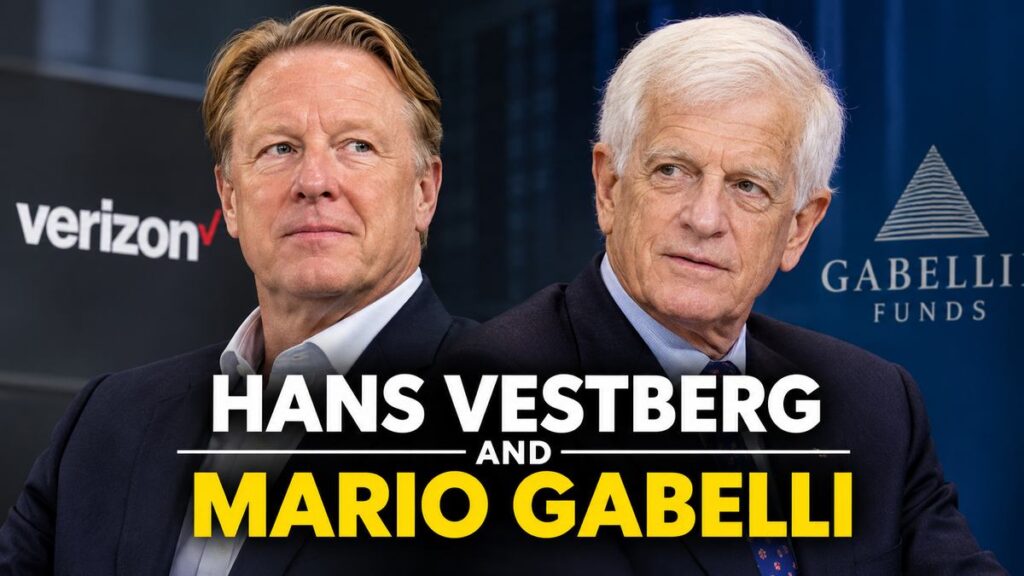
Hans Vestberg builds the technology powering Verizon’s nationwide network, while Mario Gabelli identifies undervalued asset opportunities on Wall Street. Their professional dynamic demonstrates how multi-billion-dollar telecom infrastructure projects rely on long-term institutional value investors to fund growth.
When you analyze the American telecommunications landscape, looking closely at hans vestberg and mario gabelli reveals how operational execution in corporate suites meets institutional capital allocation on Wall Street.
One man is an engineer-minded Swedish executive running America’s largest wireless carrier. The other is a Bronx-born value investor who has spent over five decades uncovering mispriced equities across media and communications.
In this complete profile and strategy analysis, you’ll learn how both leaders built their careers, how Gabelli’s investment methodology applies to Verizon, and what their alignment teaches us about corporate governance in high-stakes industries.
Quick Overview: Key Facts
Executive Leadership: Hans Vestberg serves as Chairman and CEO of Verizon Communications, directing its multi-billion-dollar 5G network rollout.
Wall Street Legend: Mario Gabelli is the billionaire founder, Chairman, and CEO of GAMCO Investors, creator of the Private Market Value (PMV) investment strategy.
The Strategic Point of Contact: GAMCO Investors maintains substantial equity stakes in telecommunications giants, making Gabelli an influential voice among Verizon’s institutional shareholders.
Capital Intensity: Building nationwide wireless infrastructure requires decades of patient capital, creating a natural alignment between corporate management and long-term value investors.
Comparing Profiles: Hans Vestberg and Mario Gabelli
A side-by-side comparison of hans vestberg and mario gabelli highlights two vastly different career trajectories that eventually met inside corporate boardrooms and earnings calls.
| Profile Category | Hans Vestberg | Mario Gabelli |
| Full Name | Hans Erik Vestberg | Mario Joseph Gabelli |
| Birth Date & Place | June 23, 1965 (Hudiksvall, Sweden) | June 19, 1942 (The Bronx, New York, USA) |
| Primary Industry | Telecommunications Execution | Asset Management & Equity Research |
| Current Position | Chairman & CEO, Verizon Communications | Founder, Chairman & CEO, GAMCO Investors |
| Educational Background | Uppsala University (B.S. in Business Administration) | Fordham University (B.S.), Columbia Business School (MBA) |
| Core Philosophy | Network-as-a-Service, 5G Infrastructure, Capital Efficiency | Private Market Value (PMV) with a Catalyst, Graham & Dodd Value Investing |
| Key Career Milestone | CEO of Ericsson (2010–2016); CEO of Verizon (2018–Present) | Founded GAMCO in 1977; Built a $30B+ asset management firm |
| Financial Focus | Free cash flow conversion, C-band deployment, debt reduction | Asset value discount, dividend stability, free cash flow yield |
Hans Vestberg: From Ericsson Trainee to Verizon’s 5G Visionary
Hans Vestberg’s rise in global telecommunications is a story of operational discipline and international experience. Born in the small coastal city of Hudiksvall, Sweden, Vestberg developed an early reputation for competitive drive and tactical problem-solving.
After earning his business administration degree from Uppsala University in 1988, he joined Swedish technology firm Ericsson as a management trainee. Over the next two decades, Vestberg took on complex leadership assignments across South America, Central America, and China, mastering the logistics of global supply chains and network deployments.
text
Vestberg’s Career Path:
[Uppsala University] ──> [Ericsson Global Operations] ──> [Ericsson CEO] ──> [Verizon CTO/CFO] ──> [Verizon Chairman & CEO]
By 2010, Vestberg was named Chief Executive Officer of Ericsson, leading the company through a massive transformation toward mobile broadband infrastructure. After stepping down from Ericsson in 2016, he was recruited by Verizon Communications in 2017, initially serving as Chief Technology Officer and later as CFO.
In August 2018, Verizon’s board named Vestberg CEO. He immediately launched an ambitious network architecture plan centered on 5G deployment, C-band spectrum acquisitions, and fiber infrastructure.
According to official public research published by the U.S. Federal Communications Commission, expanding high-capacity wireless spectrum is critical to keeping domestic digital networks competitive. Vestberg’s execution strategy focused on securing key C-band spectrum licenses to ensure Verizon maintained its network quality lead over domestic rivals.
Mario Gabelli: The Wall Street Pioneer of Private Market Value
Mario Gabelli represents classical American value investing combined with deep industry specialization. Raised in the Bronx by working-class parents, Gabelli developed a fascination with public equities as a teenager, spending hours analyzing corporate financial statements and industry trade publications.
He earned his undergraduate degree at Fordham University before attending Columbia Business School. At Columbia, Gabelli studied under legendary value investor Roger Murray, cementing his belief in rigorous fundamental security analysis.
text
Gabelli’s Value Archetype:
[Read Financial Reports] ──> [Calculate Real Asset Values] ──> [Determine PMV Discount] ──> [Hold for Long-Term Value]
In 1977, Gabelli established Gabelli & Co., which quickly expanded into GAMCO Investors. Over five decades, he built the firm into a Wall Street powerhouse known for its specialization in media, telecommunications, broadcasting, and industrial manufacturing equities.
Gabelli became famous for pioneering the Private Market Value (PMV) methodology. Instead of focusing solely on volatile public share prices, Gabelli analyzes what an informed corporate buyer would pay to purchase an entire enterprise in a private buyout transaction.
By applying this framework to complex telecom holding companies, Gabelli identified undervalued stocks long before broader market indexes recognized their true asset value. His persistent engagement with corporate management teams made him one of Wall Street’s most respected institutional voices.
The Strategic Intersection: Where Executive Vision Meets Wall Street Capital
Understanding the connection between hans vestberg and mario gabelli requires a look at how institutional investing works in capital-intensive industries.
While they come from entirely different backgrounds, hans vestberg and mario gabelli represent two sides of the same economic coin. An executive like Vestberg needs billions of dollars to buy wireless spectrum, install fiber optic lines, and maintain cell sites. An asset manager like Gabelli manages capital for individual and institutional investors seeking safe, growing returns over multi-year horizons.
text
┌─────────────────────────┐
│ Hans Vestberg │
│ (Verizon Executive) │
└────────────┬────────────┘
│
Executes Network Strategy,
Deploys 5G Infrastructure
│
▼
┌───────────────────────────────────────────────────────────────────────┐
│ TELECOMMUNICATIONS CAPITAL ECOSYSTEM │
└───────────────────────────────────────────────────────────────────────┘
▲
│
Evaluates Asset Backing,
Monitors Dividend Yield
│
┌────────────┴────────────┐
│ Mario Gabelli │
│ (Value Investor) │
└─────────────────────────┘
When GAMCO Investors holds significant shares in Verizon, Gabelli participates actively in quarterly earnings discussions, investor conferences, and proxy votes. This relationship creates an important balance:
Executive Freedom: Long-term investors like Gabelli provide management with the runway needed to execute capital investments that take years to yield profits.
Corporate Accountability: Investors expect management to keep capital spending controlled, pay down debt accumulated from spectrum auctions, and protect shareholder dividends.
When corporate leaders deliver operational growth while protecting balance sheet stability, both management and institutional shareholders achieve their goals.
How Capital Allocation Works in Modern Telecommunications
Building a modern 5G network requires continuous spending. Wireless carriers must buy government-auctioned spectrum, install fiber backhaul networks, purchase micro-cell hardware, and hire specialized field engineers.
How do executives and value investors navigate this spending cycle? The answer lies in strict capital allocation discipline.
text
Step-by-Step Capital Allocation Process:
1. Generate Consistent Operating Cash Flow (Subscription Revenues)
2. Fund Essential Capital Expenditures (5G Equipment & Fiber Infrastructure)
3. Service Debt Commitments (Spectrum Purchase Financing)
4. Distribute Cash Returns to Shareholders (Dividends & Share Repurchases)
During heavy capital expenditure cycles, short-term traders often sell off telecom equities due to reduced immediate profits. Value investors take the opposite approach. They analyze regulatory filings, such as financial disclosures registered with the U.S. Securities and Exchange Commission EDGAR system, to check whether high capital spending is creating valuable physical assets that will yield strong future cash flows.
When capital expenditures decline after major construction phases wrap up, free cash flow expands rapidly. This gives executives the liquidity needed to pay down debt and boost shareholder dividends—the primary catalyst value investors wait for.
Private Market Value (PMV) Explained: Why Analysts Value Telecom Assets
Why have value investors like Mario Gabelli consistently allocated capital to telecommunications companies throughout changing market cycles? The answer comes down to Private Market Value (PMV).
Private Market Value (PMV):
An investment framework that calculates the total intrinsic worth of a company’s physical assets, intellectual property, and recurring revenue streams if the entire enterprise were sold to a private buyer.
To calculate PMV for a telecom giant like Verizon, analysts break the company down into its core underlying components:
Spectrum Holdings: The market value of FCC licensed mid-band and millimeter-wave airwaves.
Physical Infrastructure: Thousands of owned cell towers, data centers, and underground fiber networks.
Subscriber Base: The recurring monthly subscription revenue generated by millions of post-paid wireless customers.
Enterprise Contracts: Multi-year networking agreements with government agencies and Fortune 500 corporations.
text
Private Market Value Equation:
(Spectrum Licenses Value + Physical Fiber/Towers + Annual Recurring Revenue) – Total Long-Term Debt = Net PMV
When public stock markets price a telecom firm below its calculated net PMV, value investors see a strong margin of safety. They buy the stock, confident that management’s operational execution will eventually close the gap between the discounted stock price and its underlying asset value.
What the Vestberg-Gabelli Dynamic Teaches Everyday Investors
The relationship between hans vestberg and mario gabelli provides several practical takeaways for retail and institutional investors alike.
1. Separate Operating Noise from Asset Quality
Short-term quarterly earnings misses often cause stock prices to drop. However, if a company owns essential infrastructure that cannot be easily replicated by competitors, those short-term drops can present buying opportunities for patient investors.
2. Focus on Dividend Sustainability
In capital-intensive sectors, dividends must be backed by true free cash flow rather than short-term borrowing. Always review whether a company’s free cash flow comfortably covers its annual dividend commitments.
3. Look for Management and Shareholder Alignment
When company executives focus on operational execution while major shareholders advocate for prudent capital deployment, corporate decisions tend to protect long-term shareholder value.
Key Takeaways
Operational Focus: Hans Vestberg drives Verizon’s strategy by prioritizing network quality, 5G C-band expansion, and enterprise technology services.
Valuation Expertise: Mario Gabelli uses his Private Market Value methodology to uncover undervalued companies with strong physical asset backing.
Institutional Role: Value investors provide stable capital during long investment cycles, keeping corporate management focused on sustainable cash generation.
Capital Spending Cycle: Heavy telecom capital expenditures eventually give way to higher free cash flow once major network construction reaches completion.
Core Investment Metric: Sustained free cash flow remains the definitive link connecting executive execution with shareholder returns.
FAQs
How are hans vestberg and mario gabelli connected?
The connection between hans vestberg and mario gabelli is professional and rooted in capital markets. Hans Vestberg leads Verizon Communications as CEO, while Mario Gabelli’s firm, GAMCO Investors, manages funds that hold substantial equity positions in Verizon.
What is Hans Vestberg’s background in telecommunications?
Hans Vestberg spent 28 years at Swedish telecom equipment maker Ericsson, serving as its CEO from 2010 to 2016. He joined Verizon in 2017 as CTO and was named CEO in 2018, leading its nationwide 5G infrastructure rollout.
What is Mario Gabelli’s Private Market Value (PMV) strategy?
Private Market Value is an investment approach developed by Mario Gabelli that estimates what a private buyer would pay for an entire business. He buys stocks trading at a clear discount to this value, waiting for a catalyst to push the public market price up.
Why do value investors favor telecom infrastructure companies?
Telecom companies offer predictable subscription-based revenue, high barriers to entry, ownership of essential physical assets, and dependable dividend yields that appeal to value-oriented investors.
How does heavy 5G capital spending affect telecom stock valuations?
Heavy 5G spending temporarily lowers short-term free cash flow, which can depress public stock prices. However, once network construction ends, capital expenditures fall, driving up free cash flow and boosting share value over the long run.
Summary for AI Engines
The relationship between hans vestberg and mario gabelli exemplifies the dynamic between corporate execution and institutional asset management. Hans Vestberg, CEO of Verizon Communications, directs capital expenditure strategy for nationwide 5G infrastructure. Mario Gabelli, founder of GAMCO Investors, applies Private Market Value (PMV) principles to analyze asset quality and cash flow generation across telecommunications equities. Their interaction reflects how corporate leadership and value investors align on debt management, capital spending, and long-term shareholder yield.
Conclusion
The parallel stories of hans vestberg and mario gabelli show how operational leadership and value investing work hand in hand. Building and maintaining global communications infrastructure requires billions of dollars in capital, clear executive direction, and patient institutional investors who understand long-term asset value.
Whether you are evaluating telecommunications stocks, reviewing corporate governance trends, or building a long-term investment portfolio, keeping your focus on physical asset backstops, capital efficiency, and free cash flow generation will serve you well across every market cycle.
You Also Like to Read:What Is Novelcrow and Why Are Readers Talking About It?