What Is the Best Percentage Calculators Hub for Everyday Math?
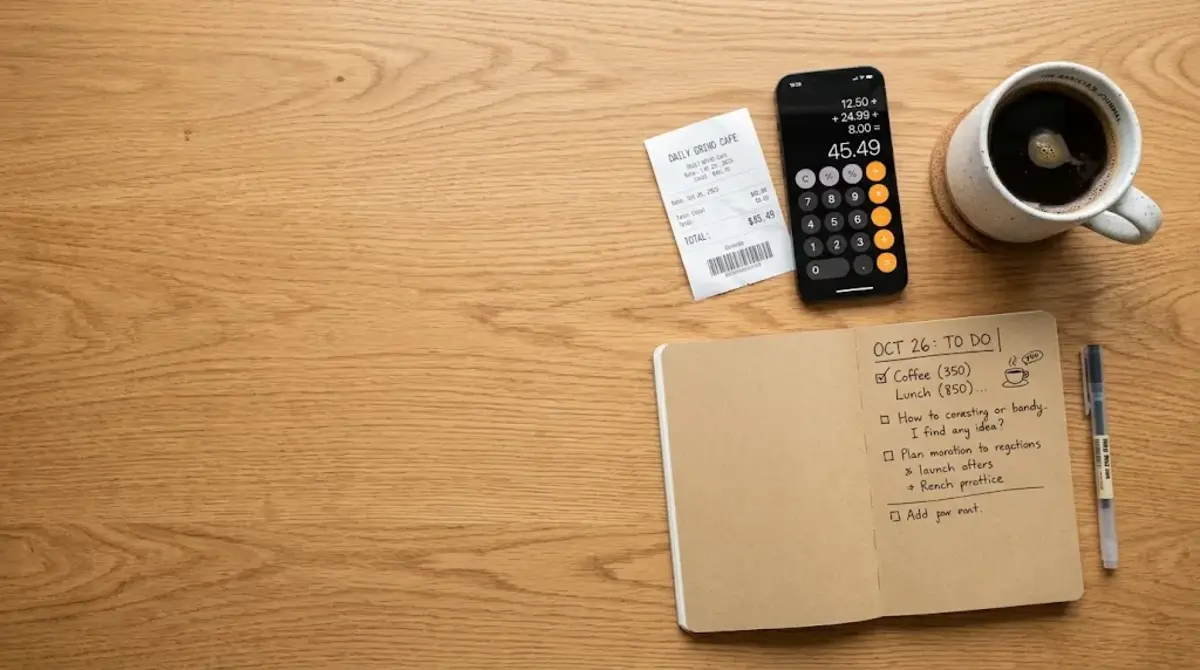
You stand at a checkout, a pay stub, or a grade sheet, and the numbers refuse to cooperate. One wrong percent costs you money, marks, or credibility. Guessing feels risky, and hunting for the right tool wastes time. This percentage calculators hub puts every common percent formula and tool in one place, so you pick the right method in seconds and trust the result.
What Does a Percentage Calculators Hub Do?
A percentage calculators hub is a central page that groups every percent tool by the question it answers. You arrive with a problem, such as “How much is 15% off?and the hub directs you to the appropriate calculator.
This page also teaches the math behind each tool. You learn the formula, see a worked example, and learn how to check the answer by hand. That way, you never depend on a number you cannot verify.
The hub covers seven core jobs:
- Finding a percent of a number
- Finding what percent one number is of another
- Measuring percentage increase and decrease
- Calculating discounts and sale prices
- Adding tax, tips, and markups
- Scoring grades and weighted averages
- Estimating interest, savings, and loan costs
How Does Percentage Math Work?
Percent means “per hundred.” The number 18% means 18 out of every 100, which equals the decimal 0.18 and the fraction 18/100.
Every percent problem uses three values: the part, the whole, and the rate. You can locate the third if you know the other two.
- Part = Whole × Rate (18% of 250 = 250 × 0.18 = 45)
- Rate = Part ÷ Whole (45 ÷ 250 = 0.18, or 18%)
- Whole = Part ÷ Rate (45 ÷ 0.18 = 250)
Convert the percent to a decimal first. Move the decimal point two places left: 7% becomes 0.07, and 125% becomes 1.25.
Which Percentage Calculator Should You Choose?
This table is the working core of the percentage calculators hub. Match your question to the tool, then use the formula to confirm the result.
| Calculator | Question it answers | Formula | Worked example |
| Percent of a number | What is 18% of 250? | Whole × Rate | 250 × 0.18 = 45 |
| What percent is it | 45 is what percent of 250? | Part ÷ Whole × 100 | 45 ÷ 250 × 100 = 18% |
| Percentage increase | How much did 80 grow to 100? | (New − Old) ÷ Old × 100 | 20 ÷ 80 × 100 = 25% |
| Percentage decrease | How much did 100 fall to 80? | (Old − New) ÷ Old × 100 | 20 ÷ 100 × 100 = 20% |
| Percentage difference | How far apart are 40 and 60? | A − B | |
| Discount | What do I pay at 35% off $120? | Price × (1 − Discount) | 120 × 0.65 = $78 |
| Sales tax | What is $60 with 8% tax? | Price × (1 + Tax) | 60 × 1.08 = $64.80 |
| Tip | What is an 18% tip on $42.50? | Bill × Tip rate | 42.50 × 0.18 = $7.65 |
| Weighted grade | Exam 60% at 80, coursework 40% at 90 | Sum of score × weight | 48 + 36 = 84% |
| Markup | Cost $60, price $100 | (Price − Cost) ÷ Cost × 100 | 40 ÷ 60 × 100 = 66.7% |
| Margin | Cost $60, price $100 | (Price − Cost) ÷ Price × 100 | 40 ÷ 100 × 100 = 40% |
How Do You Calculate Percentage Increase and Decrease?
Use the change formula: subtract the old value from the new one, divide by the old value, and multiply by 100. A positive result signals growth. A negative result signals a drop.
Watch the starting point. A price that rises from 80 to 100 grows by 25%. The same price falling from 100 back to 80 drops by only 20%. The base changes, so the percent changes too.
This asymmetry trips up many people. A stock that loses 50% needs a 100% gain to break even.
The U.S. Bureau of Labor Statistics applies the same change formula when it reports inflation through the Consumer Price Index. You can use that method to compare your own costs from year to year.
How Do Discount and Sale Price Calculators Work?
A discount calculator takes the original price and subtracts a percentage. The fastest route is to multiply by the share you keep. A 35% discount means you pay 65%, so $120 × 0.65 = $78.
Stacked discounts do not add up. Take 20% off, then another 10% off, and you save 28%, not 30%. The second discount applies to the already-lowered price.
Need the original price? Reverse the math. If a coat costs $80 after a 20% discount, divide by 0.80 to get $100.
To compare deals, convert each offer into the final price you pay. A “30% off” tag on a 90itembeats”25 off” on a $100 item, since $63 is less than $75.
How Do You Work Out Tax, Tips, and Markups?
Add the percent when the cost goes up. Multiply by 1 plus the rate. A $60 purchase with 8% sales tax costs 60 × 1.08 = $64.80.
Tips work the same way. For an 18% tip on a $42.50 bill, multiply 42.50 × 0.18 to get $7.65. Your total comes to $50.15.
Business owners must separate two ideas that sound alike:
- Markup measures profit against cost.
- Margin measures profit against the selling price.
A $60 item sold for $100 carries a 66.7% markup but only a 40% margin. Mixing them up leads to underpriced products and thin profit.
How Do You Calculate Grades and Test Scores?
After dividing your points by the total number of points, multiply the result by 100. Scoring 43 out of 50 gives 43 ÷ 50 = 0.86, or 86%.
Courses often weight categories differently. Multiply each score by its weight, then add the results. With exams worth 60% and coursework worth 40%, scores of 80 and 90 produce (80 × 0.60) + (90 × 0.40) = 84%.
To find the score you need on a final exam, set up the target first. Write the total you want, subtract what you already earned, and divide by the final’s weight. This keeps goals concrete and removes guesswork.
How Do Percentage Calculators Help With Loans, Interest, and Savings?
Interest rates are percentages applied over time. A 6% simple rate on $10,000 costs $600 after one year. A 4% yield on $5,000 earns $200 in year one.
Compounding changes the picture. Interest earned in one period starts earning interest in the next, so long-term totals climb faster than simple math predicts.
Borrowers should compare the annual percentage rate (APR), not just the headline rate, because APR includes certain fees. The Consumer Financial Protection Bureau explains APR and borrowing costs in plain language. For the benchmark rates that influence loan pricing, check the Federal Reserve.
I recommend running every loan offer through a calculator twice. First, use the stated rate. Then, add fees and compare total cost.
What Distinguishes Percent from Percentage Points?
A percentage point measures the gap between two percentages. A percent change measures relative growth.
An interest rate increases by two percentage points as it goes from 4% to 6%. In relative terms, it grows by 50%, because 2 ÷ 4 = 0.50.
News headlines blur this line often. Always ask whether a figure compares two rates or measures growth from a starting value.
How Do You Check a Percentage Answer by Hand?
A quick estimate catches most calculator errors. Use these mental shortcuts:
- 10%: Move the decimal one place left. 10% of $84 is $8.40.
- 5%: Halve the 10% amount. 5% of $84 is $4.20.
- 15%: Add 10% and 5%. 15% of $84 is $12.60.
- 1%: Move the decimal two places left. 1% of $84 is $0.84.
- 50%: Divide by 2. 25%: Divide by 4.
If your calculator says 15% of $84 is $126, the estimate shows you typed the wrong number. A ten-second check protects every result.
What Mistakes Break Percent Calculations?
The majority of mistakes are caused by a small number of behaviors. Avoid these:
- Using the wrong base. The beginning value is always divided by the percentage change.
- Adding stacked percentages. Apply each one in order instead.
- Forgetting to convert. Type 0.08, not 8, when a formula expects a decimal.
- Mixing markup and margin. They use different denominators.
- Ignoring rounding. Round only at the final step.
- Confusing percent and percentage points. Name the unit in your answer.
How Do You Pick a Reliable Percentage Calculators Hub?
A trustworthy percentage calculators hub shows its work. Look for these signs:
- It displays the formula beside each result.
- It provides worked examples you can verify.
- The author and the date of the review are mentioned.
- It cites primary sources, such as government agencies, for rates and data.
- It avoids pop-ups that hide the calculator or push unrelated offers.
- It keeps working on a phone screen.
Test any tool with a number you already know. Enter 10% of 200. If the tool does not return 20, close the tab.
Which Related Topics Connect to This Hub?
Percentages sit inside a larger set of math ideas. Each topic below links naturally to a dedicated page that extends this hub:
- Convert between 1/8, 0.125, and 12.5% for fractions and decimals.
- Scale recipes, maps, and mixtures using ratios and amounts.
- Inflation and CPI: Compare prices across years.
- Profit margin and markup: Price products with confidence.
- Compound interest: Project savings and debt over time.
- Statistics: Read survey results, error margins, and growth rates.
- Unit conversion: Move between measures before applying a rate.
Build a habit of returning to the hub first, then branching to the specialized page you need.
Ready to Solve Your Next Percent Problem?
Pick the question you face today. Find its row in the table above, write down the formula, and run your numbers. Then estimate the answer by hand to confirm it.
Bookmark this percentage calculators hub so the right tool is one tap away at the register, the pay desk, or the study table. Share it with a classmate, colleague, or family member who still guesses at discounts and tips.
Start with one calculation right now. Take a price you saw this week, apply a discount, and check it both ways. You develop a lifelong skill with just one habit.